Project
Hackable Instruments
Musicians often play instruments in ways that the designer did not expect. Musicians are also adept at turning engineering limitations into creative resources. On the EPSRC Hackable Instruments project, we asked how we could design digital tools that are as open to rich creative misuse as the acoustic and analog instruments that came before them. We also sought to understand some of the ways that performers discover unexpected uses of instruments. Outputs of the project include the D-Box, a digital musical instrument designed for modification and hacking, and Bela, a high-performance embedded computing platform for low-latency audio processing which has now spun out into an independent company.
Throughout music history, performers have been playing instruments in ways the designer did not expect. For example, distortion and feedback on the electric guitar were engineering limitations before they became the sound of rock and roll, and the way hip-hop DJs use the turntable subverts its original purpose as a home playback device. Some performers even make physical modifications to their instruments to adapt them to their personal needs.
By contrast, the “black-box” design of many digital musical instruments (DMIs) can prevent musicians from making arbitrary modifications to the instrument, and may even restrict the performer to a limited set of playing techniques envisioned by the designer. The comparative difficulty of adapting new DMIs to purposes the designer did not anticipate may hold back the uptake of these instruments in the musical community.
The Hackable Instruments project undertook a series of studies, inspired by the practice of circuit bending and by the HCI literature on appropriation, examining how performers use and modify musical instruments.
Constraints and Creativity: the Cube Instrument Study
Many digital musical instrument designs seek to give the performer as much control as possible. But could giving them less control actually be a creative benefit?
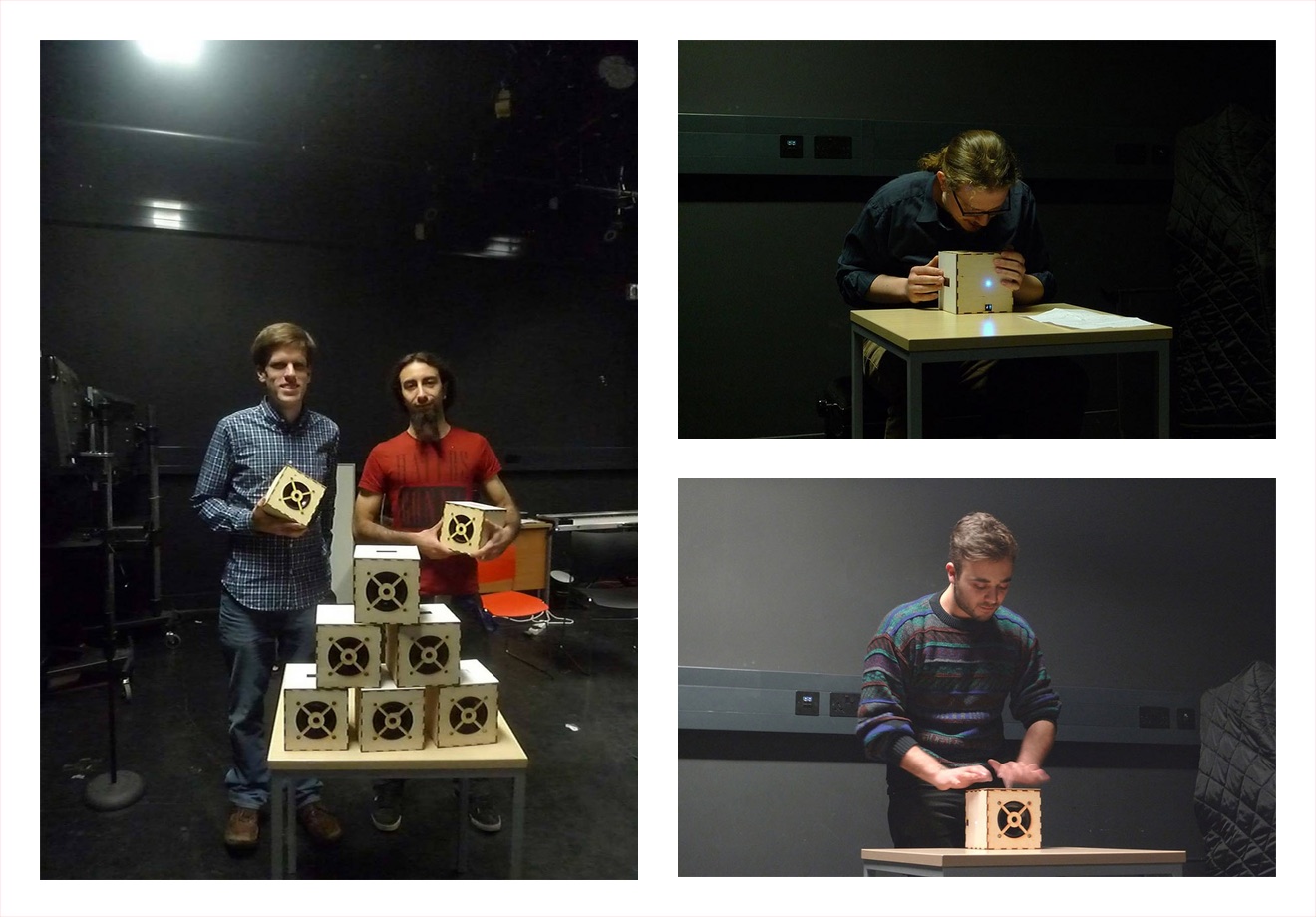
That constraints can be a source of creative inspiration has long been known. Building on earlier work by Gurevich et al., we created a highly constrained, self-contained musical instrument with a touch sensor and speaker in a wooden cube. We made 10 copies of the instrument with identical hardware and two different versions of the software:
— Two degrees of freedom: pressure changes timbre, touch position changes pitch
— One degree of freedom: pressure changes timbre, but no pitch control
We gave the instruments to 10 musicians and asked them to prepare a performance, collecting observations on their usage of the instrument and interviews and questionnaires about their experience. We found that performers on the 2 degree-of-freedom instrument explored fewer playing techniques than the 1 degree-of-freedom group, who discovered a diverse and unusual set of ways to play the instrument. Moreover, the 1 degree-of-freedom group rated the instrument more highly than the 2 degree-of-freedom group.
Our finding, though limited in size, suggests that adding more degrees of freedom does not necessarily improve the creative value of an instrument, and that in certain cases the opposite may be true.
Read the paper: Dimensionality and appropriation in digital musical instrument design
Designing for Appropriation and Modification: the D-Box
The D-Box is a digital musical instrument designed to be modified and hacked by the performer. Like the earlier cube instrument, it is a self-contained instrument with touch sensors and a wooden cube, which initially presents a simple, limited interface to the performer (though not as tightly constrained as the original cube instrument). But uniquely, the side of the box can be opened, revealing an electronic breadboard:
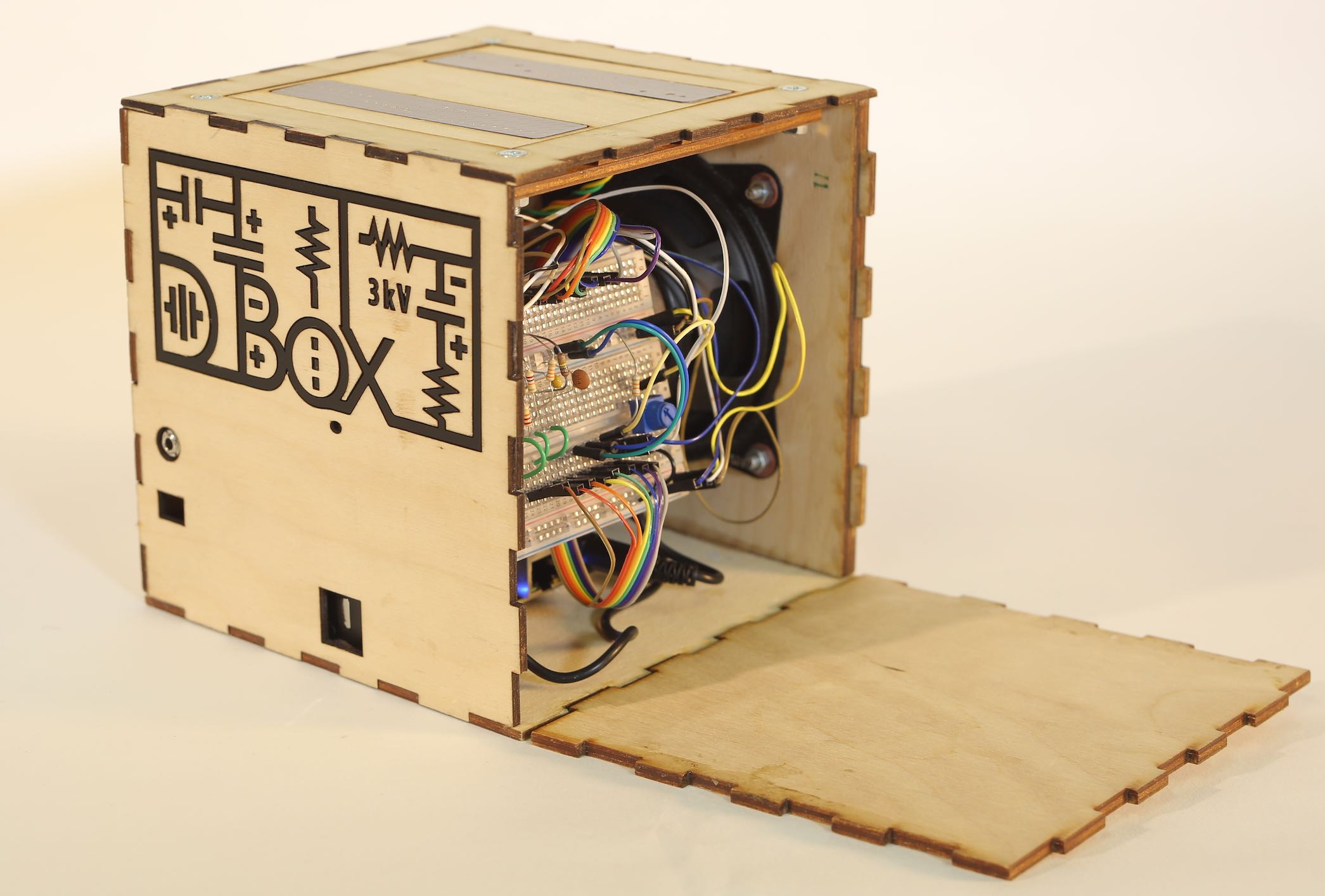
By rewiring circuits on the breadboard, the performer can discover new and unusual sounds. Unlike more familiar modular synthesisers, the behaviour of the instrument is governed by feedback loops between hardware and software, so changes in the wiring can have chaotic and unpredictable (but still repeatable) effects.
The D-Box was used in a study with 10 performers examining how they played and modified the instrument. We found that performers discovered sounds and techniques that went beyond our original design, and that experienced circuit benders could deploy their skills on the instrument.
Read about the D-Box design and performance in 'Design and use of a hackable digital instrument'
Read about using feedback between hardware and software as a musical design tool:
'Exposing the scaffolding of digital instruments with hardware-software feedback loops'
We also used the D-Box in hacking workshops with the general public, where we observed patterns of exploration and playful interaction which differ from how people interact with software tools or other musical instruments. We examine the outcomes in the context of Gaver’s work on ludic design, and offer suggestions for interactive system designers.
Read about the D-Box workshops and their implications for design:
Designing for exploratory play with a hackable digital musical instrument. Proc. DIS, Brisbane, Australia, 2016.
You can find code and design materials for the D-Box here: https://github.com/BelaPlatform/d-box
For further details on building your own D-Box, please contact us!
Bela: ultra-low latency embedded audio
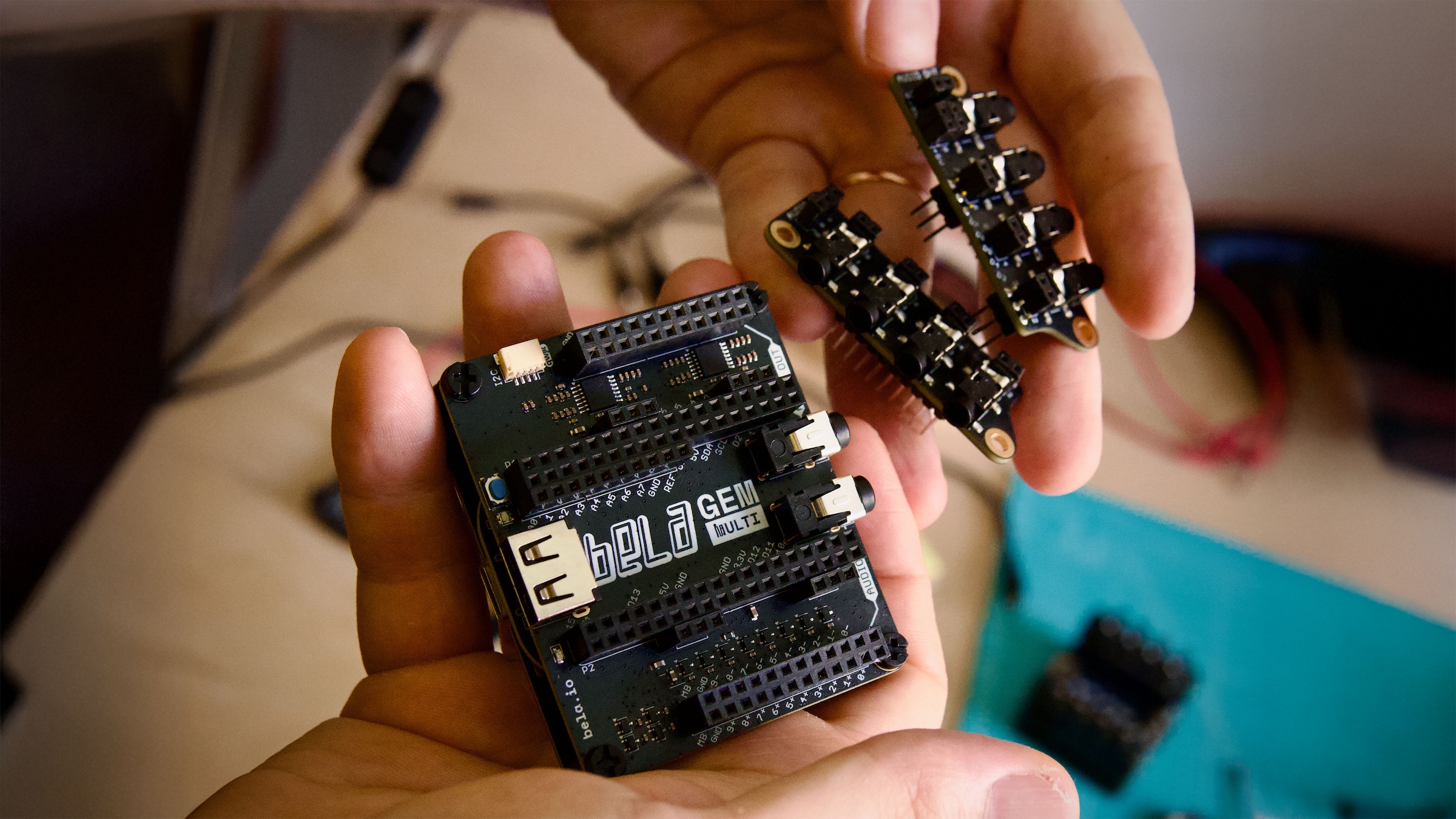
The hardware that powered the D-Box eventually developed into Bela, an open-source embedded platform for building interactive audio systems. Bela features extremely low latency (<1ms) between action and sound, much lower than on standard computers. It also features a powerful and easy-to-use IDE served from the board to the browser and a rich library of tutorials and support materials.
Bela launched on Kickstarter in 2016 and has been operating as an independent company since then. In 2025, with the support of a [fellowship from the Royal Academy of Engineering](Grants -> RAEng Research Chair), Bela Gem was released, featuring a major boost in processing performance and a completely redesigned IDE.
Read more at the Bela research page or visit the Bela website and project archive.