About the lab
The Augmented Instruments Laboratory is a music technology research team based in the Dyson School of Design Engineering at Imperial College London and the Centre for Digital Music at Queen Mary University of London. Founded in 2011 by Prof. Andrew McPherson, the lab brings together engineering, arts, humanities and social science perspectives to imagine new ways of making music.
Musical instruments have always been a meeting point of technology, skill, aesthetics and culture. In the lab, we create distinctive new instruments and study what they mean for the people who play them. We also make innovative electronic and digital tools for instrument makers. We get our designs into people's hands through open-source hardware and software, commercial spin-outs, and long-term artistic collaborations.
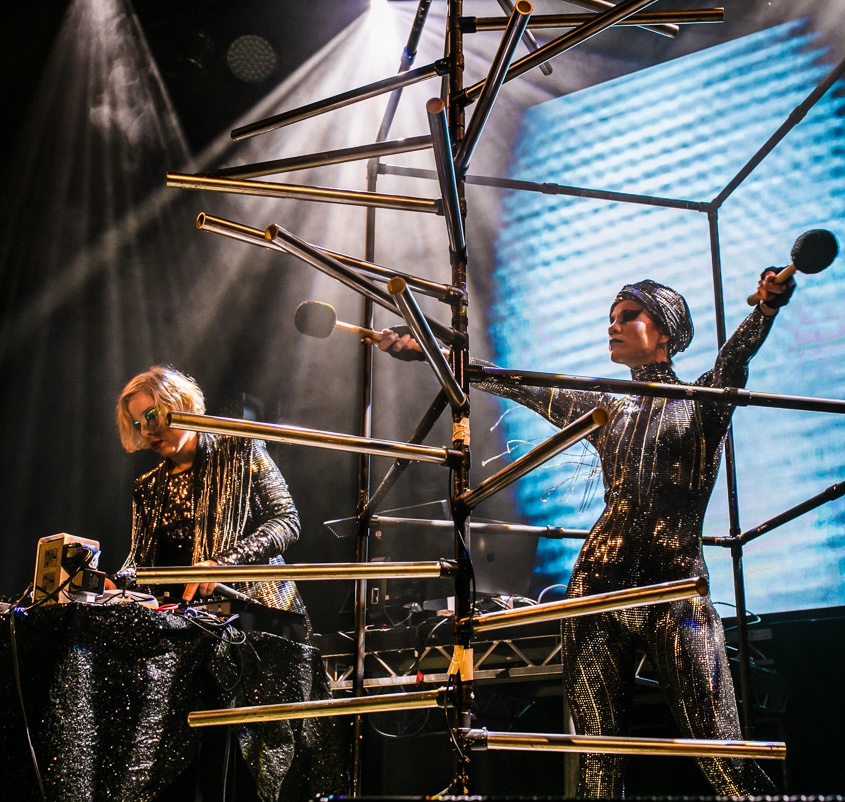
Lia Mice performing with Chaos Bells.
Why musical instruments?
Instrument design is both fascinating and challenging because it involves an irreducible entanglement of different disciplines and perspectives. Here are a few of the issues that we address in our research:

Instrument design is a difficult engineering problem
Making sound with computers is easy, but making something a musician wants to spend their life with is extraordinarily hard. From an engineering perspective, the demands of instrumentalists are stringent: the instrument must provide a wide dynamic range, a high level of detail and nuance, low latency, and rich audio and tactile feedback, all with near-perfect reliability.
In the lab, we address these challenges through high-performance embedded computing tools like Bela, new types of sensors and actuators, and open-source software tools including AI models for sound synthesis and transformation.
Read more: Our tools for instrument makers
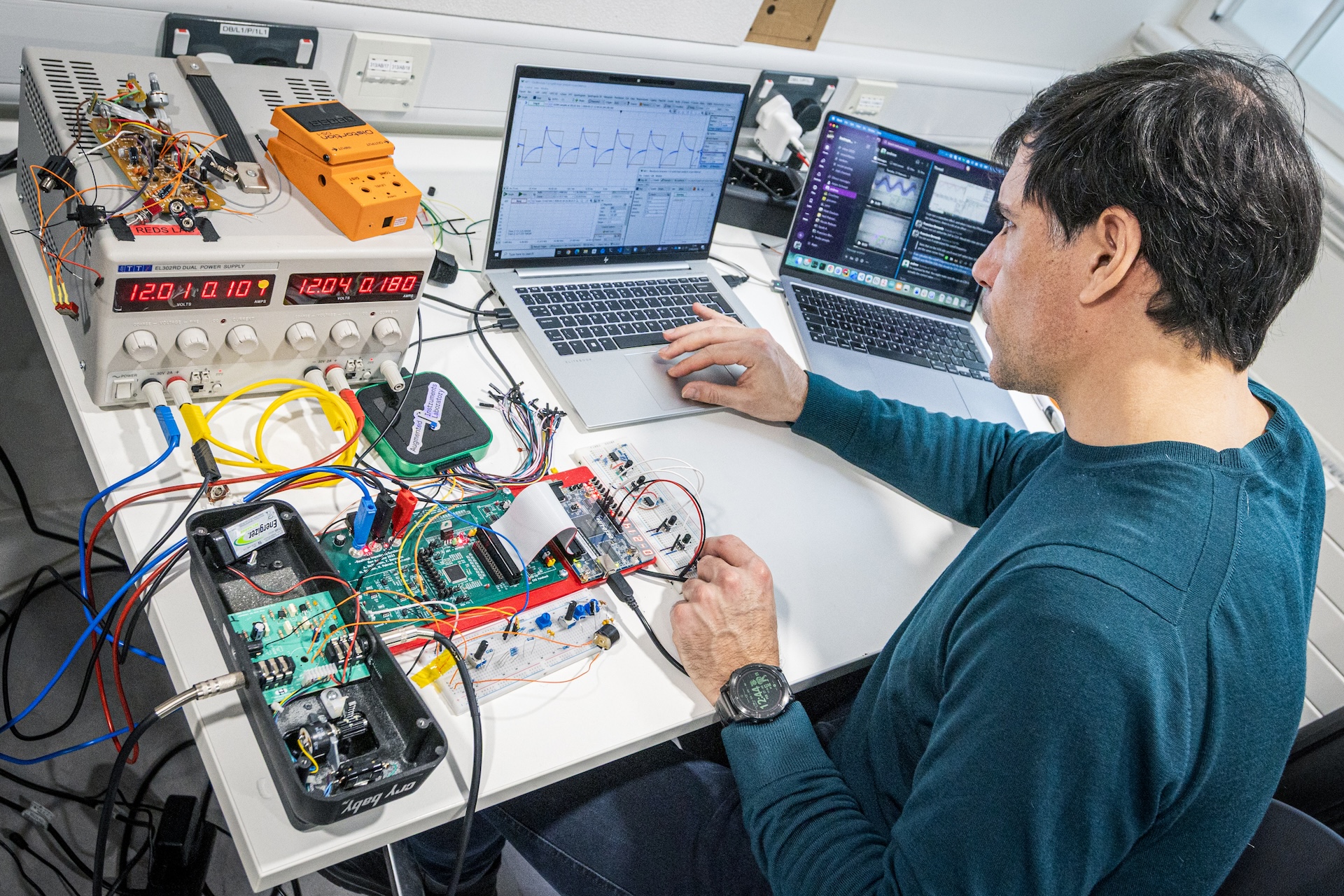
Francisco Bernardo working in the lab. Photograph by Sam Walton.
Playing an instrument involves a rich interplay of mind, body and technology
Musical performance is a pinnacle of human sensorimotor skill, involving complex processes of embodied cognition. To the trained performer, the instrument can even come to feel like an extension of their body. For these reasons, music has long been of interest to psychologists, neuroscientists and human-computer interaction (HCI) researchers.
In the lab, we study the relationships between performers and instruments. We explore how instruments shape the ways we think and act and how modifying instruments can challenge old habits and suggest new creative possibilities. We also look for ways to leverage existing skills in the design of new instruments to shorten the learning curve.
Read more: Our studies with musicians
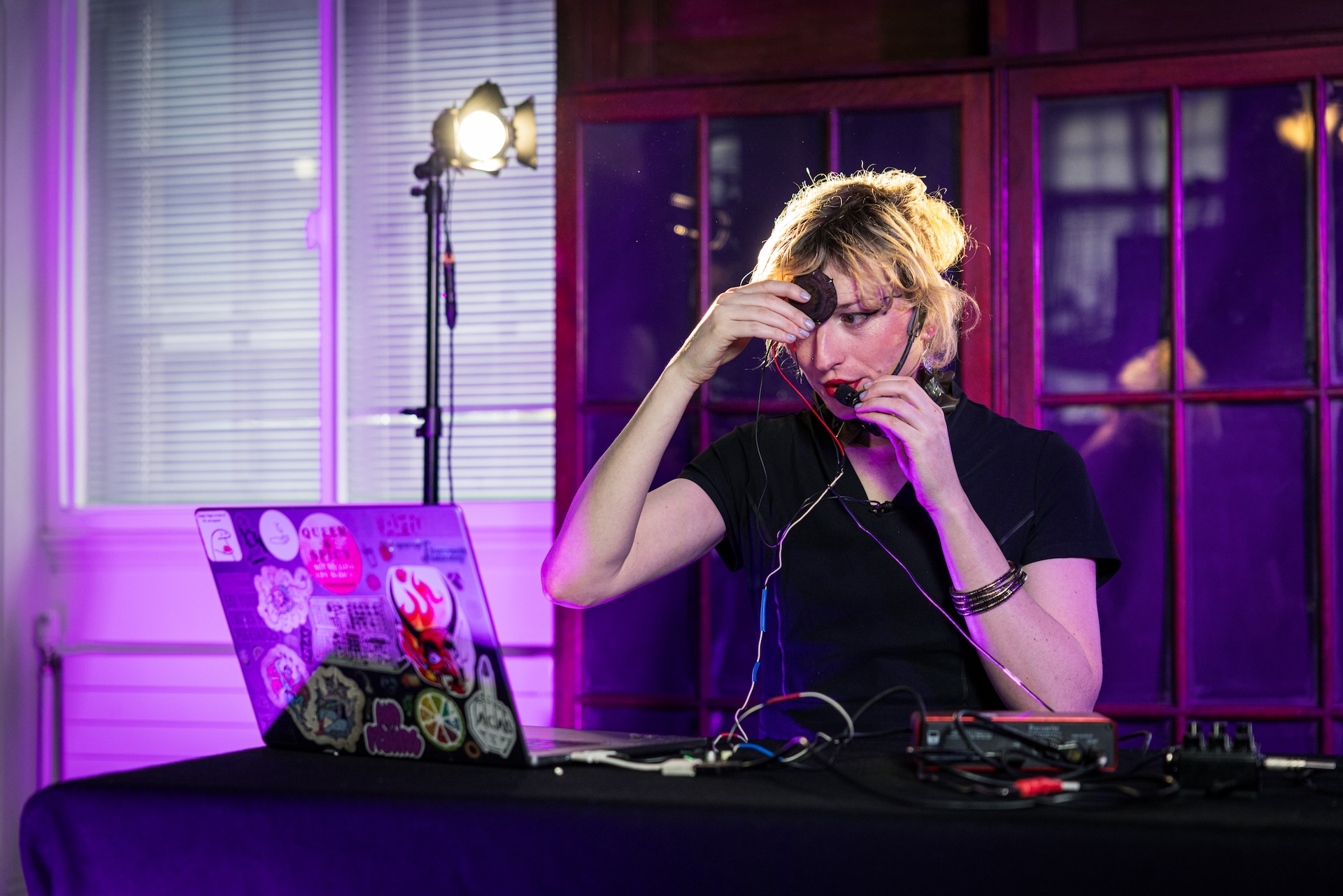
June Kuhn performing with Ephemerides. Photograph by Sam Walton.
Instruments reflect and shape cultures
Musical instruments are not simply passive technical objects. They embed cultural values both obvious and subtle, and their meaning is intertwined with social context. Designers of new instruments inevitably encode ideas about music into their instruments, even as performers often challenge and subvert the uses that the designers had in mind.
In the lab, we take inspiration from musicology, the humanities and HCI to understand the nexus between technology, culture and aesthetics. We are also concerned with whose voices are represented in the design process. One strand of our research works with disabled musicians and community organisations to design accessible instruments which address the ways that traditional instruments exclude a significant segment of the musical population.
Read more: Our work on creative misuse and accessible instrument design
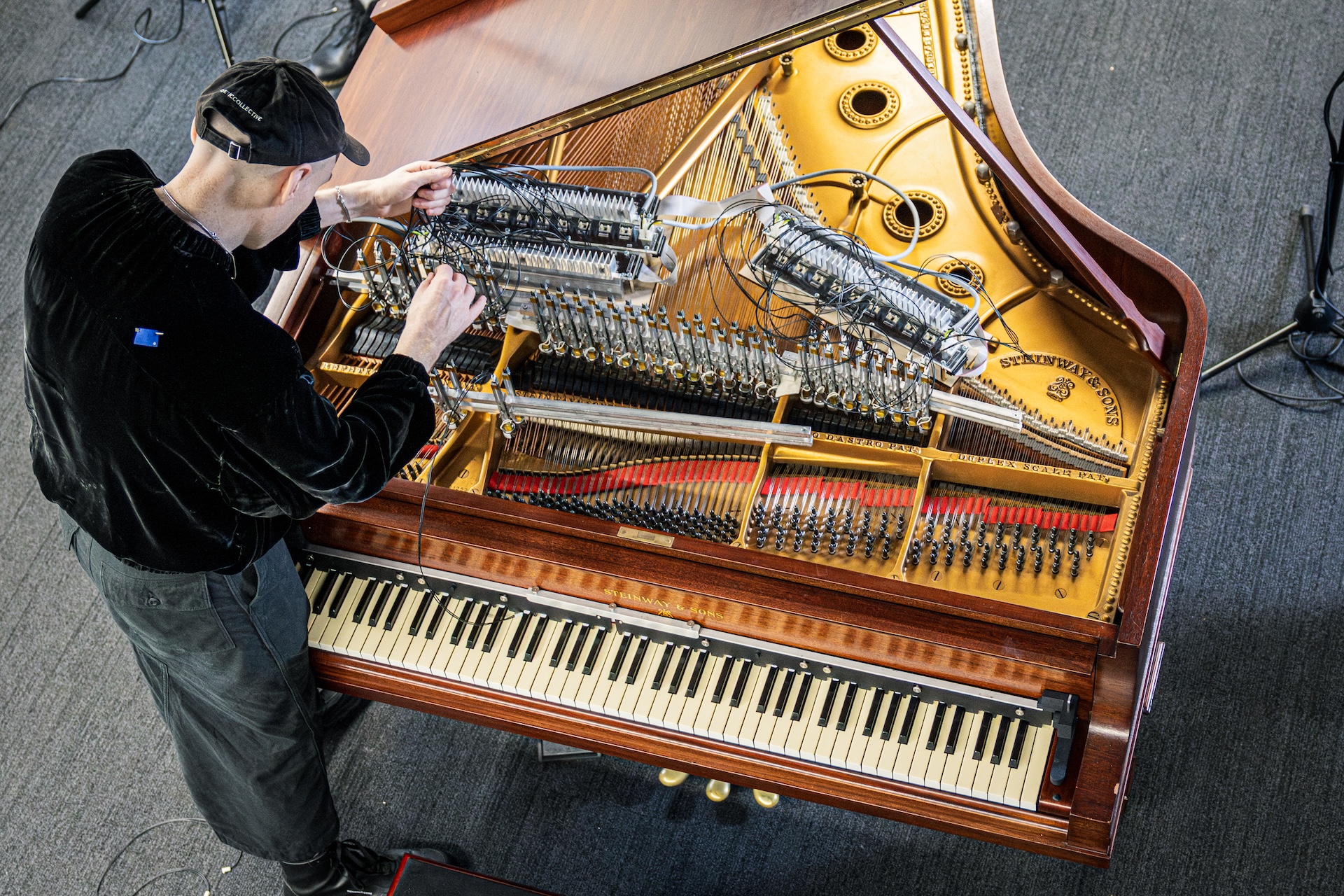
Lewis Wolstanholme setting up the Magnetic Resonator Piano. Photograph by Sam Walton.
All technical tools encode human values
Even the lowest-level engineering tool is never musically neutral. Designers are influenced by what their tools make it easy or hard to do, and design always takes place within an ecosystem of familiar musical concepts, discourse and technical frameworks. In this way, instrument design is never as simple as identifying a problem and then solving it, or creating and fulfilling a technical specification.
In the lab, we turn a critical lens back on the very same engineering processes that we use to build instruments. Drawing on philosophy and science and technology studies (STS), we call attention to the implicit values embedded in our tools and research methods. Through critical reflection and design practice, we seek a mutually beneficial balance between goal-driven engineering processes and open-ended artistic exploration.
Read more: Our critical and reflective research
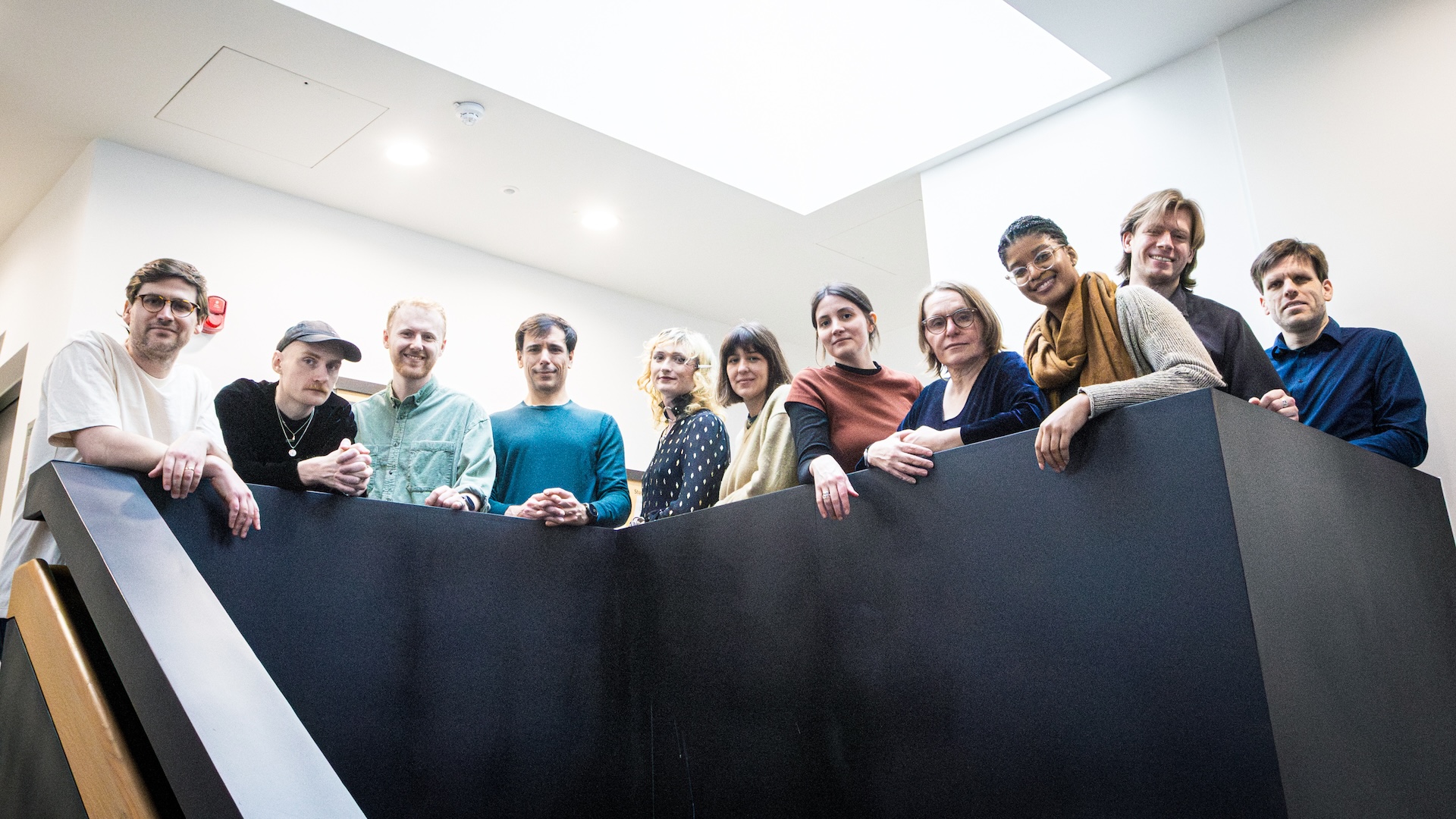
The Augmented Instruments Laboratory, 2026. Photograph by Sam Walton.